
Leveraging AI & Machine Learning for Smarter Cybersecurity

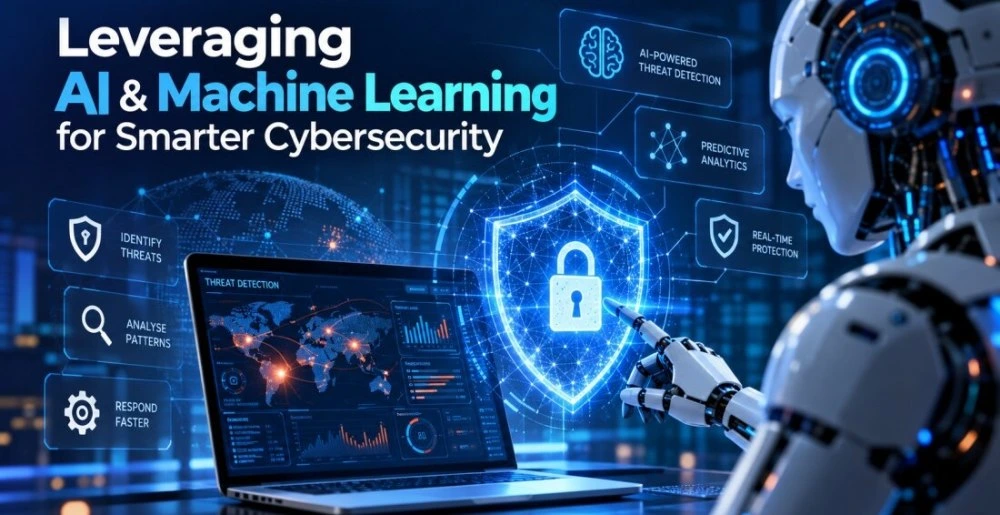
Among a plethora of technologies at work within cybersecurity, artificial intelligence and machine learning are two of the front-running technologies with immense potential to enhance threat detection and response in cyber-attacks. It is possible to defend against cyber-attacks with accuracy and efficiency only if the capabilities of AI & ML are applied correctly. Many organisations and academic institutions, for instance, The NorthCap University, Gurugram, are recognising the significance of AI & ML in the enhancement of threat detection and response capabilities.
The Changing Face of Cyber Threats
The cybersecurity landscape has dramatically changed in the last couple of decades. Cyber threats have evolved to become targeted and persistent, moving from classic malware and phishing attacks to APTs and zero-day exploits. Traditional measures of cybersecurity, such as signature-based antivirus and rule-based firewalls, were ill-equipped to keep up with the rate at which new threats were emerging.
The Role of AI & ML in Cybersecurity
AI & ML technologies make it possible to create intelligent systems that will learn from data, adapt to new threats, and make informed decisions. Modern strategies in cybersecurity are very dependent on this. Several techniques provided by AI & ML to enhance threat detection include:
- Machine learning algorithms can analyse large amounts of data for the normal behaviour of a network model. Everything else that differs from such a baseline can then be highlighted as potentially hostile, including strange patterns of data transfer or access attempts. In particular, the anomaly detection approach is very important for unknown threats that have no signature.
- AI-driven predictive models can reduce the likelihood of any potential cyber threat by taking examples from historical data and current trends. Such models analyse patterns and behaviours attributed to past attacks to predict the likelihood of future threats, hence enabling organisations to take necessary precautionary measures.
- A good number of variations of traditional threat hunting generally allow for manual investigation on the part of cybersecurity professionals. This will be time-consuming and may suffer from human errors. AI-driven tools can automate this process, continuously scanning networks and systems in search of indicators of compromise (IoC). Thus, drastically reducing the time taken to detect and respond to threats.
- AI & ML can enhance malware detection by examining the characteristics and behaviours of files. This is way above traditional signature-based techniques of known malware signatures. ML models can identify newly born or unknown malware by learning patterns in the behaviour of files.
- AI can integrate threat intelligence from a wide range of sources, such as dark web forums, threat feeds, and social media. This kind of comprehensive analysis provides a view of the entire threat landscape and thus helps organisations stay ahead of emerging threats.
Industry Applications
AI & ML in cybersecurity have become a practical reality with many successful implementations by
various organisations in digitising their security postures. Here are some real-time examples:
- Darktrace is a top cybersecurity company that specialises in threat detection and response using AI & ML. Their machine-learning-powered platform is capable of identifying and responding autonomously to threats, reducing the burden on security teams and increasing response times.
- Cylance deals with endpoint security. Their use of AI is involved in the prevention of infecting malware. The AI-driven mechanism analyses file DNA, declaring it malicious or benign, thus making it highly accurate at detecting and blocking malware.
- IBM Watson for Cybersecurity has modified IBM Watson to make up IBM Watson for Cybersecurity. It can index multiple terabytes of unstructured data, including security blogs and research papers, that can be continuously accessed for insights related to threat detection and response. Emerging Trends in AI-Powered Cybersecurity The future for AI & ML in cybersecurity remains quite promising. Further advancements, surely, will increase the capabilities of threat detection and actuation. Emerging trends include the following:
- Federated Learning: An approach where AI models are trained on decentralised sources of data, enhancing privacy and security by only localising data, while still reaping collective learning benefits.
- Explainable AI: The development of AI models that are transparent about their decisions is very vital in enhancing trust and confirming transparency in cybersecurity applicability.
- AI-Driven Security Orchestration: Artificial intelligence integrated with security orchestration and automation tools will let incident response teams act in a more cohesive and quick way on threats. In other words, AI & ML are very powerful tools that help in combating cybersecurity threats through threat detection and response. While these challenges still exist, there is no denying how these technologies greatly improve security posture and mitigate risks. Given the fact that cyber threats change every second, there is genuinely no difference in the integration of AI & ML into cybersecurity between proactive organisations and those who stay behind in securing digital assets against cyber actors.
Author
Ms. Kanika Gupta
Assistant Professor
Department of CSE
LinkedIn: www.linkedin.com/in/kanikagupta-ncu