

Quantum Algorithms vs Classical Algorithms: A Simple Comparison for Tech Aspirants

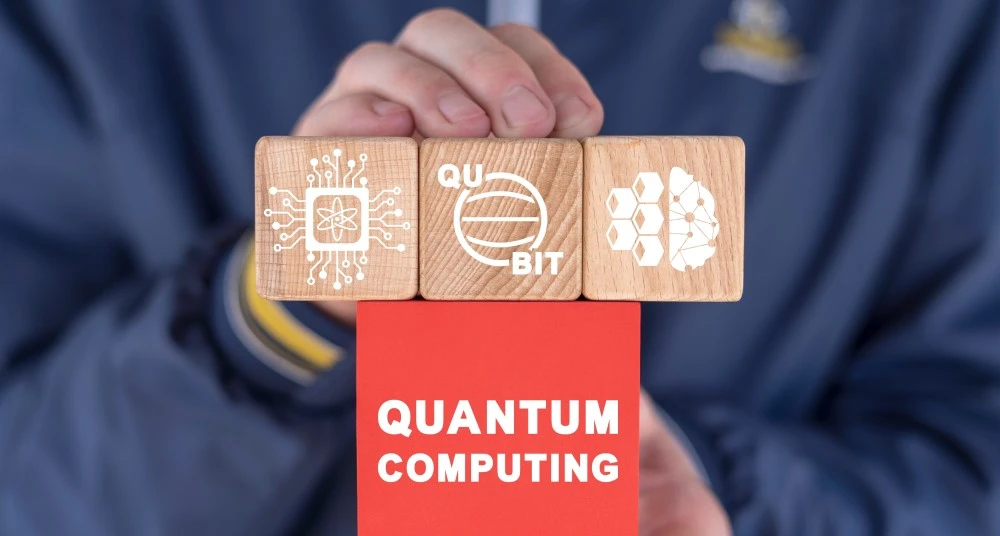
Computing has traditionally been built around classical computers that process information using bits represented as 0s and 1s. From mobile applications and web platforms to artificial intelligence and large-scale data processing, classical computing has transformed almost every area of modern life. However, as computational problems become increasingly complex, researchers are exploring new approaches to computation. One of the most promising approaches is quantum computing. Understanding Quantum Algorithms vs Classical Algorithms is therefore becoming increasingly relevant for students interested in computer science, software development, artificial intelligence, cybersecurity, and emerging technologies.
At the centre of this emerging field are quantum algorithms, which use principles derived from quantum mechanics to process information in fundamentally different ways from conventional algorithms. The difference is not simply that quantum computers are faster versions of classical computers. Classical computers use bits and logical operations, whereas quantum computers use quantum states, qubits, and quantum circuits. Certain algorithms can exploit properties such as superposition and interference to address particular computational problems in ways that are difficult for classical machines.
For technology aspirants, the important question is not whether quantum computing will immediately replace classical computing. Instead, it is understanding where each approach is useful, what skills are required, and how classical and quantum technologies may work together.
Core Foundations: How Quantum and Classical Computation Differ
The foundations of classical and quantum computing are different, even though both ultimately aim to process information and solve computational problems. Classical computing relies on established principles of Boolean logic, algorithms, data structures, and conventional programming languages. A classical processor performs operations on bits using logical gates and follows a sequence of instructions. Students interested in exploring this emerging field can refer to Understanding Quantum Computing: Why It Is the Next Frontier for Computer Science Engineers to learn more about its significance for computer science. Quantum computing introduces a different computational model based on quantum phenomena. A quantum processor operates on qubits and uses quantum gates to manipulate their states.
Binary Logic vs. Quantum States: Bits vs. Qubits
A classical bit has two possible states: 0 or 1. Every piece of information processed by a classical computer is ultimately represented using combinations of these binary values.
A qubit, or quantum bit, can also be measured as 0 or 1, but before measurement it can exist in a quantum superposition of states. This can be represented mathematically as:
|ψ⟩ = α|0⟩ + β|1⟩
Here, α and β represent probability amplitudes, and their squared magnitudes determine the probabilities of measuring 0 or 1. With multiple qubits, the system can represent a combination of many possible states. However, this does not mean that a quantum computer simply calculates every possible answer simultaneously and automatically produces the correct one. Quantum algorithms must be carefully designed so that interference increases the probability of useful outcomes.
Another important property is entanglement, where quantum states can become correlated in ways that have no direct classical equivalent. These quantum properties are fundamental to many quantum algorithms.
Difference Between Classical and Quantum Gates (AND/OR vs. Hadamard/CNOT)
Classical computers use logical gates such as AND, OR, NOT, NAND, and NOR to manipulate bits. For example, AND produces 1 only when both inputs are 1; OR produces 1 when at least one input is 1; and NOT reverses the input.
Quantum computers use reversible quantum gates. Examples include the Hadamard (H) gate and Controlled-NOT (CNOT) gate. The Hadamard gate can place a qubit into a superposition. The CNOT gate operates on two qubits and can be used to create entanglement.
Therefore, the difference between classical and quantum gates is not merely the name of the gate. Quantum gates operate on quantum states and must preserve the mathematical properties required by quantum mechanics.
Deterministic Execution vs. Probabilistic Quantum Circuits
Classical programs generally produce deterministic results when given the same input and operating conditions. If a program contains an instruction to calculate 5 + 3, the result is consistently 8.
Quantum circuits are different. The state of a quantum system is described probabilistically, and measurement produces a particular outcome according to the probability distribution generated by the circuit. Consequently, quantum algorithms usually involve running a circuit multiple times and analysing the measurement results.
Comparative Analysis: Key Differences Between Classical and Quantum Algorithms
The comparison between classical and quantum approaches becomes clearer when we examine how they represent information, execute operations, and address computational problems.
| Aspect | Classical Computing | Quantum Computing |
| Basic unit | Bit | Qubit |
| Possible state | 0 or 1 | Superposition of states |
| Main operations | Classical logic gates | Quantum gates |
| Computation | Usually deterministic | Probabilistic measurement |
| Key principles | Boolean logic and conventional computation | Superposition, interference and entanglement |
| Programming | Conventional programming languages | Quantum development SDKs and hybrid frameworks |
| Hardware | CPUs, GPUs and other classical processors | Quantum processors |
| Typical applications | General-purpose computing | Specific problems where quantum algorithms may provide an advantage |
Time Complexity & Speedups: Polynomial vs. Exponential Growth
An important aspect of algorithm analysis is time complexity. Complexity measures provide computer scientists with a means to assess the relationship between the computational resources needed by an algorithm and the input size.
Classical algorithms may have constant, logarithmic, linear, polynomial, or exponential complexity for various problems. Some quantum algorithms offer theoretical speedups for particular problems, such as an efficient quantum algorithm for integer factorisation (Shor’s algorithm) and a quadratic speedup to perform unstructured search (Grover’s algorithm).
However, quantum speedup is problem dependent. Not every classical problem will become faster on a quantum computer.
Solving Complex Computational Problems and Optimization Scenarios
Many real-world problems are characterised by searching through a large number of possible solutions. Such optimisation problems, such as scheduling, routing, resource allocation, portfolio optimisation, and configuration problems, are common in several domains.
Quantum computing research is examining if quantum systems could offer advantages for particular optimisation problems. Quantum algorithms and quantum-inspired approaches are being studied to tackle various fields, including optimisation, machine learning, logistics, and others. The performance of these approaches depends on particular algorithms, hardware, problem structures, and implementations.
Quantum Simulations for Material Science, Chemistry, and Drug Discovery
A particularly promising application of quantum computing is simulating physical systems. Molecules and materials are governed by quantum mechanical phenomena. Simulating complex molecular interactions on classical computers can demand significant computational resources, especially as the size of the system grows.
Quantum computers are physically based on quantum mechanical principles and therefore have the potential to be applied to various quantum simulations. Research in this space explores various applications, including molecular modelling and simulation, material discovery, chemical reaction analysis, drug discovery, energy-related materials, and scientific simulations.
Benchmark Algorithms: Shor’s and Grover’s vs. Classical Solutions
Two of the most widely discussed quantum algorithms are Shor’s algorithm and Grover’s algorithm. They illustrate different types of potential quantum advantage.
Shor’s Algorithm vs. Classical Integer Factorization (RSA Encryption Impact)
Shor’s algorithm is a quantum algorithm for integer factorisation. Its significance comes from the fact that some widely used public-key cryptographic systems rely on the computational difficulty of factoring large integers.
RSA is a well-known example of a cryptographic system based on mathematical problems involving integer factorisation. A sufficiently powerful fault-tolerant quantum computer running Shor’s algorithm could threaten RSA-based encryption. This is one reason researchers and cybersecurity organisations are investigating post-quantum cryptography and new cryptographic systems designed to resist quantum attacks.
It is important to distinguish this theoretical capability from the current state of quantum hardware. The existence of Shor’s algorithm does not mean that today’s quantum computers can immediately break commonly deployed RSA systems.
Grover’s Algorithm vs. Classical Unstructured Database Search
Grover’s algorithm addresses the problem of searching an unstructured space. A classical brute-force search may require examining a number of possibilities proportional to N in the worst case. Grover’s algorithm can reduce the number of required queries to approximately the square root of N under the appropriate quantum model.
This represents a quadratic speedup rather than an exponential one. Grover’s algorithm is therefore a useful example for understanding why claims about quantum computing should be connected to the specific problem being solved.
Impact on Cryptographic Systems and the Rise of Quantum Cryptography
Quantum computing has significant implications for cybersecurity. The potential future ability of quantum computers to attack some existing public-key cryptographic systems has encouraged research into quantum-resistant security methods.
At the same time, quantum cryptography explores the use of quantum properties for secure communication. Quantum key distribution, for example, uses properties of quantum systems to detect certain types of interception. For students interested in cybersecurity, understanding both conventional cryptographic systems and emerging quantum technologies can provide useful interdisciplinary knowledge.
Prerequisites and Skills Needed to Build Quantum Software
Students do not need to become quantum physicists before beginning to explore quantum computing. However, a strong foundation in several areas can make the learning process easier. For students looking to strengthen their understanding of the mathematical and scientific principles behind this field, Math & Physics Concepts Every Quantum Computing Engineer Needs to Know can provide further insights into the essential concepts.
- Computer science fundamentals
- Algorithms and data structures
- Linear algebra
- Probability and statistics
- Basic quantum mechanics
- Programming
- Mathematical reasoning
- Understanding of quantum circuits
- Knowledge of conventional software development
Students exploring different areas of computer science can also refer to Ultimate Guide to Computer Science Engineering (CSE) Specializations to understand the broader range of specialisations within the discipline.
Transitioning from Classical Programming Languages to Quantum Development SDKs
Students who already know languages such as Python can begin exploring quantum programming through development frameworks and SDKs. Quantum development environments allow users to create quantum circuits, apply gates, simulate circuits, execute experiments, and analyse measurement results.
The transition is conceptually different from conventional programming because quantum programs often involve constructing circuits and reasoning about probability amplitudes and measurement. Nevertheless, fundamental programming skills remain valuable. Knowledge of functions, variables, algorithms, debugging, data structures, and computational thinking continues to be useful.
Quantum Machine Learning Models and Hybrid Quantum-Classical Workflows
Another of the promising areas of research is quantum machine learning. Simply stated, quantum machine learning studies how quantum computing can be applied together with different machine learning algorithms. In these models, quantum computers are not supposed to replace classical computers completely, but rather, the systems can work in parallel. For instance, one can use classical devices to preprocess data, apply quantum circuits to it, read the results of the computation, and use classical programs to update parameters’ values. Such a scheme is also beneficial because modern quantum computers are not fully developed and have various issues with noise, connectivity, and other problems. Therefore, a hybrid approach is the best way to attack the issue of building a quantum computer capable of performing useful computations.
Official Degree Programs at The NorthCap University (NCU)
Students interested in building careers in emerging areas such as quantum technology can develop their foundation through a strong computer science and engineering education. Students considering this academic pathway can explore B.Tech Computer Science Engineering to learn more about the undergraduate programme.
A strong undergraduate foundation can help students understand algorithms, programming, mathematics, data structures, artificial intelligence, cybersecurity, and other areas that connect with emerging computing technologies.
For students considering quantum computing, it is useful to remember that the field is interdisciplinary. Computer science knowledge can be complemented with mathematics, physics, cybersecurity, artificial intelligence, and software development skills.
Frequently Asked Questions (FAQs)
How Is Quantum Computing Better Than Traditional Classical Computing?
Quantum computing is not necessarily better than classical computing in all areas. It can be said that quantum computers are designed to tackle specific problems that are relevant. For example, Shor’s and Grover’s algorithms can perform specific tasks more efficiently, but classical computers are still the way to go for general computations.
Why Doesn’t Shor’s Algorithm Work Efficiently on a Classical Computer?
Shor’s algorithm uses principles of quantum physics such as quantum-mechanical phase shifts and quantum interference to perform efficient integer factorization. A classical computer is not able to directly execute operations that utilize quantum interference, and thus executing the same algorithm on a classical computer would not have the same benefits.
Will Quantum Computers Break Existing Classical Computer Encryption Code?
A sufficiently powerful fault-tolerant quantum computer could break certain forms of public key encryption like RSA, using something called Shor’s algorithm. It’s worth noting that such a computer does not exist yet and may not exist for a long time, if ever. This possible threat in the future is what is fueling the development of post-quantum cryptography.
Which Field Is Better for Engineering Freshers: Artificial Intelligence or Quantum Computing?
Artificial intelligence and quantum computing represent different areas of technology. Artificial intelligence currently has broad applications across software and industry, while quantum computing is an emerging field involving quantum algorithms, hardware, mathematics, physics, and specialised software. Students can consider their interests in areas such as machine learning, software development, mathematics, physics, cybersecurity, and emerging quantum technology when choosing an area of study.
Is Quantum Computing Hard to Learn for Computer Science Students?
Quantum computing introduces new concepts such as qubits, superposition, quantum gates, measurement, and quantum states. However, computer science students with foundations in programming, algorithms, mathematics, and logical reasoning can gradually learn these concepts. Beginning with simple quantum circuits and simulations can make the transition easier.
What Is the Core Difference Between Classical and Quantum Logic Gates?
Classical logic gates operate on classical bits using Boolean operations such as AND, OR, and NOT. Quantum gates operate on qubits and transform their quantum states. Gates such as Hadamard and CNOT enable operations involving superposition and entanglement, which are central to quantum computation.
Conclusion
Understanding Quantum Algorithms vs Classical Algorithms is becoming more important for students who want to have an insight into the future of computing. Classical computing is the heart of modern software, information systems, artificial intelligence, and other spheres of computer technology. Quantum computing uses quantum states and quantum mechanics principles to allow us to build new ways of information processing.
The most valuable takeaway for technologists in the field right now is understanding that quantum computing will not replace classical computing, but it will be used to solve specific problems that require new algorithms.
Shor’s algorithm showcases the power of quantum algorithms because it effectively solves factorisation and cryptographic problems. Grover’s algorithm, on the other hand, provides a quadratic improvement in search efficiency, which is applicable in many fields of computer science. Quantum simulations, optimization, and machine learning are all active areas of research.
For computer science students, learning mathematics, programming, and developing skills in algorithmics and software development will provide the best starting point for a career in quantum computing. The field of computer science itself is changing, and researchers who know both classical and quantum algorithms will be able to work in multiple fields.
Author
Sneha Kandacharam
Assistant Professor
Department of Computer Science & Engineering
The NorthCap University, Gurugram
LinkedIn: https://www.linkedin.com/in/kandacharam-sneha/