

Why a BTech in Semiconductor Technology Could Be the Smartest Career Choice of the Decade

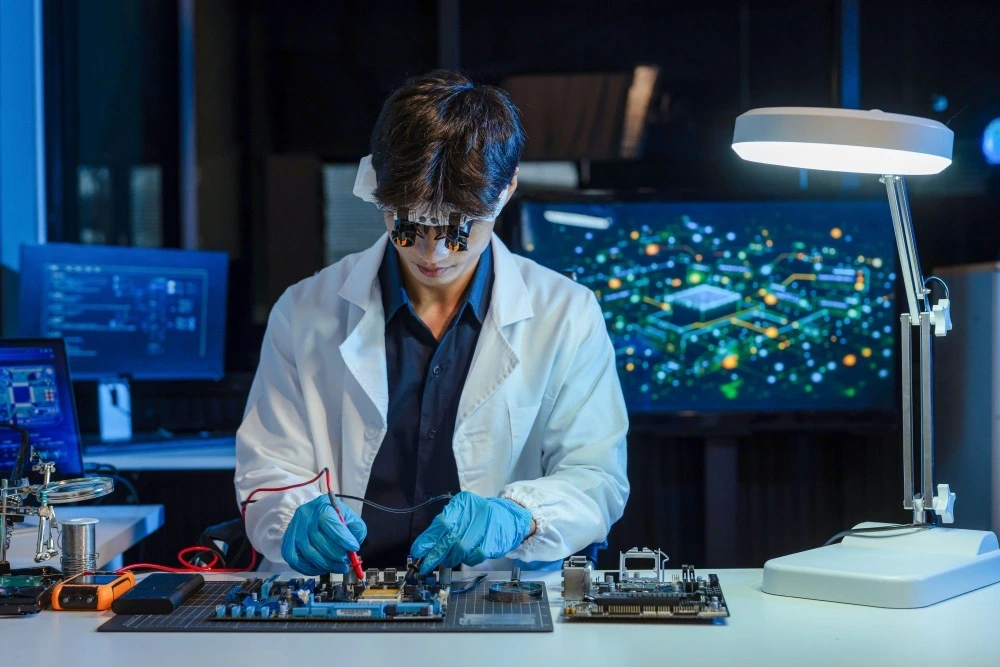
Imagine a world without smartphones, laptops, electric cars, artificial intelligence or any type of medical device. Almost all technological innovations that make a difference in everyday life have one factor in common: they all have a semiconductor chip.
The semiconductor is the “brain” of modern-day electronic devices and regulates all the activities from a smartphone to a smart home appliance, satellites, self-driving cars, and advanced AI systems.
The Global Semiconductor Boom
The semiconductor industry has become one of the most important and strategically significant industries in the world in recent years. The world’s governments have been spending billions of dollars to increase chip manufacturing at home and to reduce their reliance on overseas supply chains.
India is also advancing towards building a robust semiconductor ecosystem with the India Semiconductor Mission and various other government-led missions. With an increasing number of fab houses, design houses, and R&D centres, one problem has become more and more apparent—the lack of skilled manpower in the semiconductor industry.
This has created some special circumstances for students who would like to start their careers in one of the fastest-changing parts of technology.
Why Specialisation Matters
Conventional engineering courses have a wider knowledge base about electronics and computer engineering. But chip design and manufacture require specialised knowledge that is not covered in these normal courses.
A BTech course in Semiconductor Technology trains students in the following aspects:
- VLSI (Very Large-Scale Integration) Design
- Physics of Semiconductors
- Chip Design and Manufacturing Process
- Electronic Design Automation (EDA)
- Testing and Verification of Chips
- Packaging of Chips
- Embedded Systems and IoT Integration
In contrast to traditional electronics engineers, these specialised skills are in huge demand among many semiconductor companies across the world.
Learning Beyond the Classroom
Semiconductor engineering is a very application-oriented field. It cannot be learned from books. Exposure to sophisticated laboratories, advanced design software, fabrication processes and cleanroom environments, where semiconductor devices are fabricated under ultra-controlled conditions, is needed.
Through hands-on learning, students can gain insight into all aspects of chip development, from integrated circuit design to fabrication, testing, packaging and finally using the chips in real-world applications.
The Power of Industry and Academic Collaboration
One of the hallmarks of quality semiconductor education is partnership with top-tier research organisations. To address this requirement, The NorthCap University (NCU) has introduced its BTech in collaboration with IIT Mandi to establish a novel academic environment which has a mix of industry education and exposure to high-end research.
Students gain the benefits of:
- Exposure to cutting-edge semiconductor labs and research labs
- Advice from seasoned professors and scholars
- Experiential learning: lab sessions, summer immersion programmes
- Opportunities to work on emerging semiconductor technologies
- Relevant curricula for the industry in keeping with the trends of the times
Building Expertise for Tomorrow’s Technologies
Today’s semiconductor engineers are involved in several new technologies. The curriculum offered at NCU trains students on the following topics:
Advanced Semiconductor Materials: Students will be exposed to materials that are being used in electric vehicles, renewable energy systems, high-frequency communications, and next-generation power electronics, such as Silicon, Gallium Nitride (GaN), and Silicon Carbide (SiC).
VLSI and Chip Design: Students become familiar with designing integrated circuits with millions and even billions of transistors using industry-standard Electronic Design Automation (EDA) tools and hardware description languages, including Verilog and VHDL.
Semiconductor Fabrication: It is essential for semiconductor engineers to know how the chips are physically made. The students are introduced to the various fabrication techniques such as photolithography, thin-film deposition, etching, oxidation, and doping techniques.
Embedded Systems and Intelligent Devices: The course curriculum also ties in semiconductor design and its applications to real-world applications, such as embedded systems, IoT, sensors, and intelligent electronic devices which serve as the basis for current smart technologies.
Opportunities in the semiconductor industry span design, manufacturing, research and product development and are rewarding in their own right.
A World of Career Opportunities
Graduates may find employment in many careers including:
- VLSI Design Engineer
- Physical Design Engineer
- Verification and Validation Engineer
- Process Engineer
- Semiconductor Manufacturing Engineer
- EHS Packaging and Testing Engineer
- Embedded Systems Engineer
- Application Engineer
- Research and Development Engineer, Sanyo Japan, Japan
They cover sectors such as consumer electronics, telecom, healthcare, aerospace, automotive, defence, renewable energy and artificial intelligence.
Graduates can look forward to good employment prospects across the country and abroad, as semiconductor companies have established research and development hubs in India, including multinational companies.
Why This Is the Right Time
Semiconductor devices are becoming increasingly advanced and are being used in a wide range of application areas, such as Artificial Intelligence, autonomous vehicles, 5G and 6G communication, cloud computing, robotics, quantum technologies, and smart manufacturing. Continuing advances in these technologies will only drive up the need for qualified semiconductor engineers.
The students entering this field are preparing for the future of technology that will be used by the world in the coming few decades.
Engineering the Future with NCU
At The NorthCap University, students are not just studying another engineering course; they are becoming part of the burgeoning semiconductor revolution in India. The university’s BTech, in association with IIT Mandi, in Semiconductor Technology equips its students with academic excellence, research-driven learning, industry exposure, and industry-focused training to enable them to start one of the most exciting and future-oriented careers in the world.
It is a programme for students who are fascinated by innovation, electronics and cutting-edge technology, where they can participate in technologies that will shape the future of computing, communication, healthcare, mobility and artificial intelligence. Semiconductors and the engineers making them are the next technological revolution. So, will you be on their list?
Author
Dr. Anuradha
Associate Professor
Department of Computer Science and Engineering
The NorthCap University, Gurugram