

AI in Branding: How Ads Read Your Mind

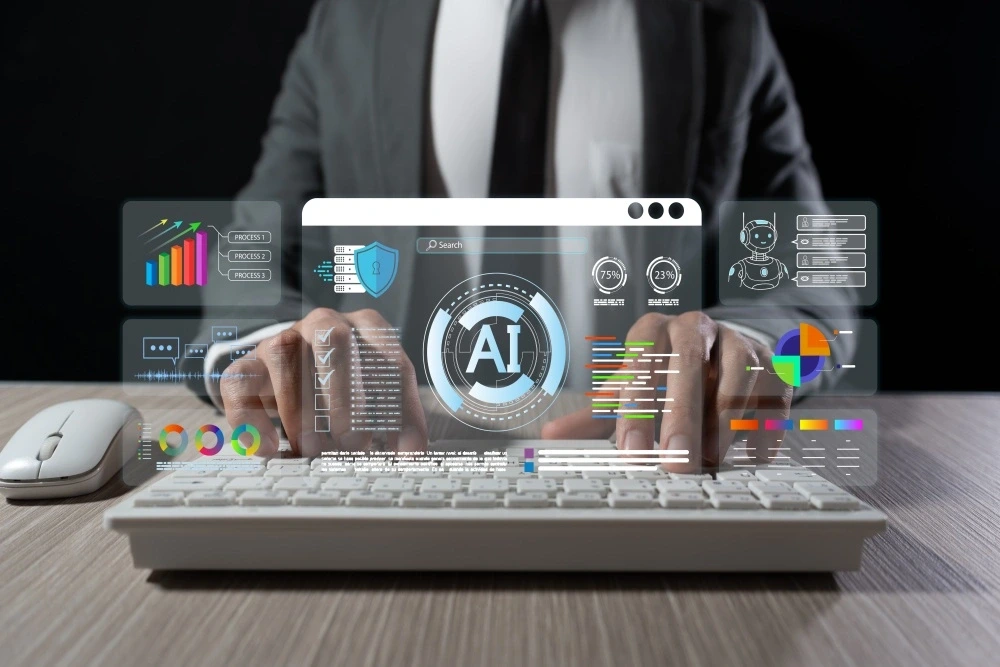
Artificial Intelligence (AI) is dramatically changing how brands develop by completely reinventing the way businesses understand their consumers, develop marketing strategies, and build strong customer relationships. Particularly in an age when everyone is competing on the Internet, brands can’t just rely on old ways of advertising anymore; therefore, businesses have turned to AI-driven technologies for creating personalised, data-oriented, and highly engaging consumer experiences. Marketers, with the help of AI, can gather huge amounts of consumer data from websites, social media, mobile apps, and online sales to gain insights into customer preferences, buying behaviours, emotions, and future buying intentions with astonishing precision. Such thorough understanding helps brands to target their marketing efforts more accurately by giving them opportunities to personalise offers, serve targeted ads, run tailored email marketing campaigns, and suggest relevant products, leading to increased customer engagement and loyalty.
The AI-based recommendation systems deployed by top e-commerce and streaming companies are great examples of personalised services that not only raise customer satisfaction but also build customer-brand relationships. Apart from personalisation, AI brings a revolution to content marketing by offering generative AI tools that can be used to produce blog articles, social media posts, product descriptions, advertising copy, videos, images, and entire marketing campaigns in just a few minutes, allowing brands to stay in touch with their audience consistently while cutting costs and saving valuable time. This role of AI is not about eliminating human involvement, but about providing a very helpful assistant for the automation of mundane tasks, ideation, and allowing experts to concentrate on strategic planning, storytelling, and innovation. With the help of smart chatbots and virtual assistants, AI has even changed customer service by making it instant, 24/7, and interactive. It not only responds to customers but also facilitates the buying process by recommending products and resolving issues, thereby providing customers with a better experience, leading to greater customer satisfaction and a good reputation for the brand. By learning from previous interactions, these intelligent systems enhance the process so that the next exchanges are more precise and personalised than ever before.
Predictive analytics is another significant area wherein AI has basically taken over the work of human marketers. It not only assists them in forecasting consumer demand but also helps them detect market trends, determine customer lifetime value, anticipate customer churn, and make pricing and inventory decisions optimally before problems arise. So, instead of basing decisions on past performance, businesses can now proactively rely on data-driven approaches to maximise the efficiency of their marketing and increase returns on investment. AI, through its transformative power, has enabled hyper-targeted campaigns that make digital advertising more effective than ever. It is now possible to analyse an individual’s demographics, browsing activity, interests, purchasing behaviour, and even offline activities to serve them highly relevant ads at the right moment.
In addition, automated bidding and campaign optimisation tools that run on AI are also used to maximise advertising effectiveness and, at the same time, minimise wastage. Brand building on social media with the help of AI-driven sentiment analysis, trend tracking, identification of influencers, and prediction of engagement has brought about a significant leap in the marketing strategies of brands that can now understand the public’s point of view easily, keep a tab on brand reputation, respond to customer feedback swiftly, and create content that really hits the target. With the continued development of voice search, augmented reality, virtual reality, and conversational AI, branding will become even more interactive, immersive, and personalised, providing richer customer experiences across various digital touchpoints.
However, AI also raises critical ethical issues. It increases concerns about data privacy, the possibility of biased algorithms, lack of transparency, dissemination of fake news, and extreme automation. Also, consumers nowadays want brands to be responsible in their use of AI and, at the same time, protect personal information and refrain from fake communications. That is why companies have to introduce ethical uses of AI, ascertain fairness in algorithmic decision-making, adhere to privacy laws, and sustain human control over important marketing decisions. The future winners among brands will not necessarily be those who possess the most powerful AI tools but those who manage to integrate artificial intelligence with human creativity, emotional intelligence, empathy, and ethical leadership. Despite AI’s remarkable abilities in data analysis, pattern recognition, and process automation, it still falls short of human abilities. Humans have an emotional touch that can build trust, understand complex cultural contexts, and tell stories. So, branding in the future will be a matter of combining cutting-edge technology with real human interaction. Those businesses that perceive AI as a co-worker and not as a substitute for human marketers will be the ones to reap the benefits of strong customer relations, brand loyalty, improved marketing, and even sustainable competitive advantage in the digital world. Most importantly, as AI features keep being updated, the branding process will turn out to be ever smarter, more anticipative, more customer-specific, and more customer-centred than ever before.
Dr. Amit Dangi
Associate Professor
Department of Management and Commerce
The NorthCap University, Gurugram
Research Area: Online Retailing, Decision Making, Consumer behavior.
LinkedIn: https://www.linkedin.com/in/dr-amit-dangi-0647a424/