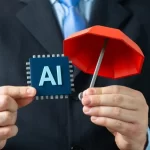

AI in BTech Programmes: Specialisations & Careers


Artificial Intelligence (AI) is no longer just a technology that’s futuristic; it’s a revolution that is transforming industries, economies, and education. From healthcare and finance to manufacturing, law, and entertainment, AI-based technologies are driving innovation and creating new career opportunities. With more companies turning to AI for decision-making, automation, machine learning, and Generative AI, the demand for AI professionals is growing exponentially. This change has also transformed engineering education, and AI is now a part of mainstream BTech programmes rather than a niche specialisation.
AI Integration in BTech
With AI integrated into BTech programmes, students will not only learn effectively but also apply their knowledge in practice. Courses typically include machine learning algorithms, deep learning, neural networks, cloud computing, big data analytics, intelligent systems, ethical AI, and more. Students also work in laboratories, live industry projects, internships, hackathons, and research projects, gaining hands-on experience in AI applications and prompt engineering to bridge the gap between classroom learning and real-world work. This enables them to solve complex technological challenges.
Career Options
The career opportunities for AI graduates are vast and growing. AI Engineers, Machine Learning Engineers, Data Scientists, Business Intelligence Analysts, Cloud AI Architects, Robotics Engineers, NLP Specialists, and AI Research Associates are among the most sought-after professionals across industries. Technology companies, consulting firms, financial institutions, healthcare organisations, and government agencies are increasingly looking for graduates with the ability to design intelligent systems, automate processes, analyse large datasets, and develop AI-powered solutions. AI knowledge also provides a strong foundation for entrepreneurship, helping graduates launch technology start-ups or develop AI-based products and services.
AI Integration at NCU
In response to this growing industry requirement, The NorthCap University (NCU), Gurugram, has adopted an institutional approach to AI education through the NCU AI Excellence Initiative. Instead of treating AI as an academic focus within a single discipline, NCU has integrated Artificial Intelligence into the curriculum, research, and assessment processes. This reflects NCU’s commitment to developing a future-ready ecosystem that equips students with both technical expertise and AI competencies.
NCU has also integrated AI-based pedagogical practices into its teaching and learning ecosystem. Faculty members utilise adaptive learning platforms, AI-assisted content generation, gamified learning methods, prompt engineering activities, and critical thinking-based assessments to create personalised learning experiences for students. This shift from conventional lectures to technology-enabled learning helps students develop analytical thinking, creativity, and problem-solving skills required in today’s AI-driven workplace. Technology-enabled student support is also an integral part of the University’s approach.
AI-Based Learning Management System
The CanPlus AI Learning Management System allows faculty members and academic advisers to track student engagement through learning analytics and identify students who require academic support. These data-driven insights enable timely mentoring and personalised support, helping students learn more effectively and improve their academic performance.
The integration of AI into assessment is also a key part of this initiative. By implementing Mercer | Mettl’s AI-powered examination platform, NCU ensures examination integrity through automated identity verification, intelligent invigilation, and behaviour analytics, thereby enhancing the effectiveness of the assessment process.
Value Added through Certification in AI
As a Certiport Authorised Testing Centre, NCU offers internationally recognised technology certifications such as Microsoft Azure AI-900, Pearson Generative AI, and many more, enhancing students’ employability.
NCU is also investing in advanced infrastructure, research, and innovation. The Intel Unnati AI Lab, equipped with 5th Generation Intel® Xeon® Scalable Processors, along with Data Science Laboratories and Centres of Excellence, supports cutting-edge research in Artificial Intelligence, Deep Learning, Natural Language Processing, and Generative AI. These facilities foster research collaboration, innovation, and industry-backed projects, enabling students and faculty to contribute to the AI Excellence Initiative through a highly practical approach.
Final Thoughts
Today, universities are redesigning engineering programmes to prepare graduates for an AI-driven future. Students need not only programming and software development skills but also the ability to use AI tools to solve problems, develop innovative solutions, and drive research and innovation.
The National Education Policy (NEP) 2020 also supports this direction by encouraging multidisciplinary learning, industry integration, digital literacy, and experiential learning. As a result, BTech programmes in Artificial Intelligence, Machine Learning, Data Science, Robotics, Natural Language Processing (NLP), Computer Vision, and Generative AI equip students with the knowledge and skills required to become future technology leaders capable of applying these technologies responsibly and effectively.
Author
Prof. Rita Chhikara
Director, Department of Computer Science and Engineering
The NorthCap University, Gurugram